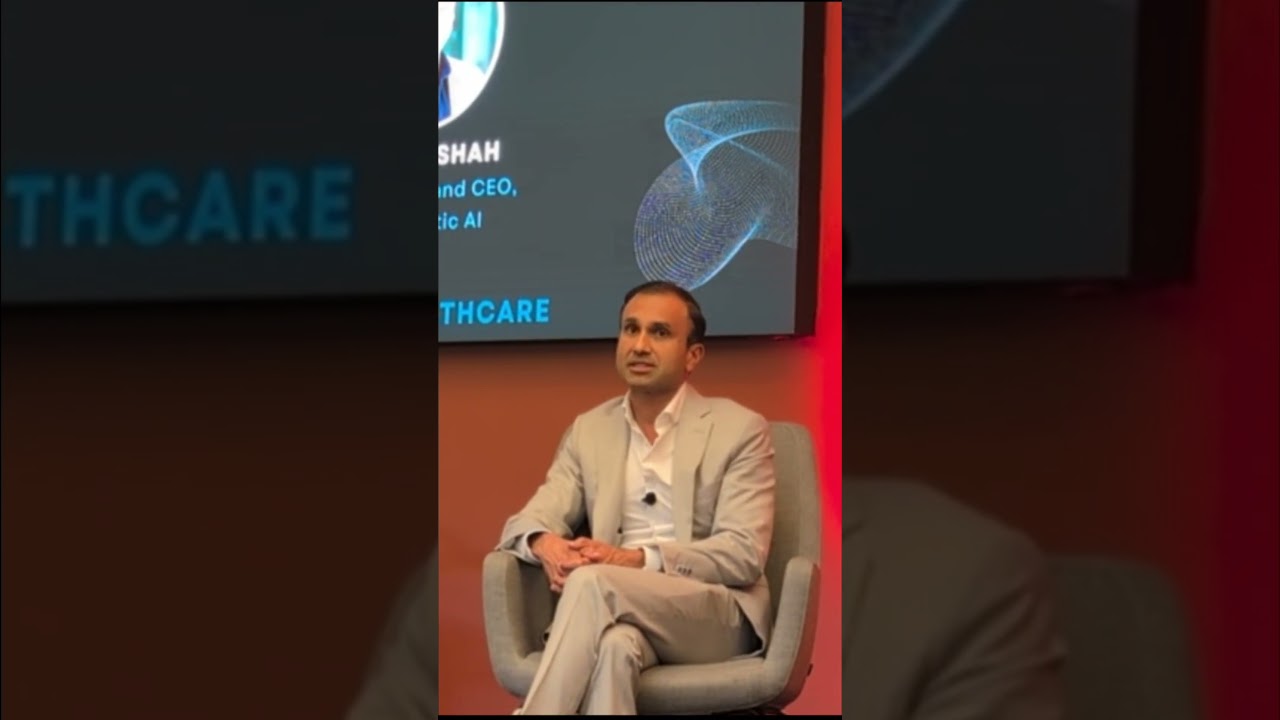
INSIDE POLARIS: THE ARCHITECTURE BEHIND SAFER AI
Polaris isn’t just a model — it’s a modular architecture for safer generative AI healthcare agents. In this segment, Munjal Shah breaks down how Polaris uses redundant models and safety scaffolds to prevent hallucinations, increase reliability, and bring clinical-grade standards into AI design.
The result: a smarter, slower, more trustworthy approach to healthcare AI — inspired by how real-world safety systems work.
Featuring Munjal Shah, CEO of Hippocratic AI
Inspired by roller coasters and aerospace — Polaris is how generative AI healthcare agents can operate safely, with confidence and control.
Key Takeaways
- Polaris is a modular architecture — not just one model
- Redundancy is key to safety: multiple checks, multiple systems
- Borrowed from aerospace, automotive, and healthcare safety models
- Prevents hallucinations by design, not just prompting
- Built to support clinical-grade, trustworthy AI behavior
Full Transcript
you released a paper very recently uh called Polaris which essentially I won't steal your thunder but it stitches models together to ensure that safety accuracy low hallucination and so
on can you talk a little more about the Polaris architecture itself and what inherently within it makes sure that it covers the deficiencies of AI agents or LLMs otherwise
you know there's this notion that you can make one model that's safe but really if you look at all safety systems in all engineering environments the safest systems are
always redundant systems there's always multiple things helping to ensure the safety you know you're never like "Oh we just had one brake on the car so it doesn't run
away there you know on the on the roller coaster right?" No there's actually redundant brakes on the roller coaster there's redundant ways it can stop the thing safely there's
redundant seat belts there's a seat belt and a bar that holds you in like they double up on everything and we said how can we double up on everything
in healthcare how can we double up on all the risky tasks the critical care instruction tasks like we don't want to get that wrong we don't want to hallucinate
on that we don't want to be wrong on that and that's where Polaris was born and Polaris is a constellation of models where we run multiple models sometimes in serial
sometimes in parallel and then you get the answer and you check it and then another one checks it and then you do a voting and then you can test
against a known rubric and you can say "Okay are they all on track?" if any one of them's out of line you go "Wait something's wrong we better we
better hold this" and so it slows it down but makes it more safe and that's what Polaris is all about

Munjal Shah
Munjal Shah is the CEO and Co-founder of Hippocratic AI. He is leading the development of safe, generative AI agents designed to support clinicians and expand access to care for millions of patients with chronic conditions.
Frequently Asked Questions
What is “Super Staffing”?
It’s the idea that AI healthcare agents can scale the presence of trained support staff, enabling 10x care without 10x headcount. AI becomes a multiplier, not just an assistant.
Can language models really replace nurses or counselors?
Not replace — but augment. AI can handle repetitive, rules-based tasks and deliver information at scale. The human element is still critical for judgment, empathy, and nuance.
How does Hippocratic AI ensure these agents are safe to use?
Each model is reviewed and validated by real professionals — like 1,000 genetic counselors — before going live. Safety, auditability, and expert confidence are non-negotiable.
Related Videos
10:23
0:24
2:56
0:43
1:21
0:47
2:37
Stay Informed with the Future of AI in Healthcare
Get the latest updates from Munjal Shah on how generative AI is reshaping healthcare staffing, safety, and patient care — delivered straight to your inbox.